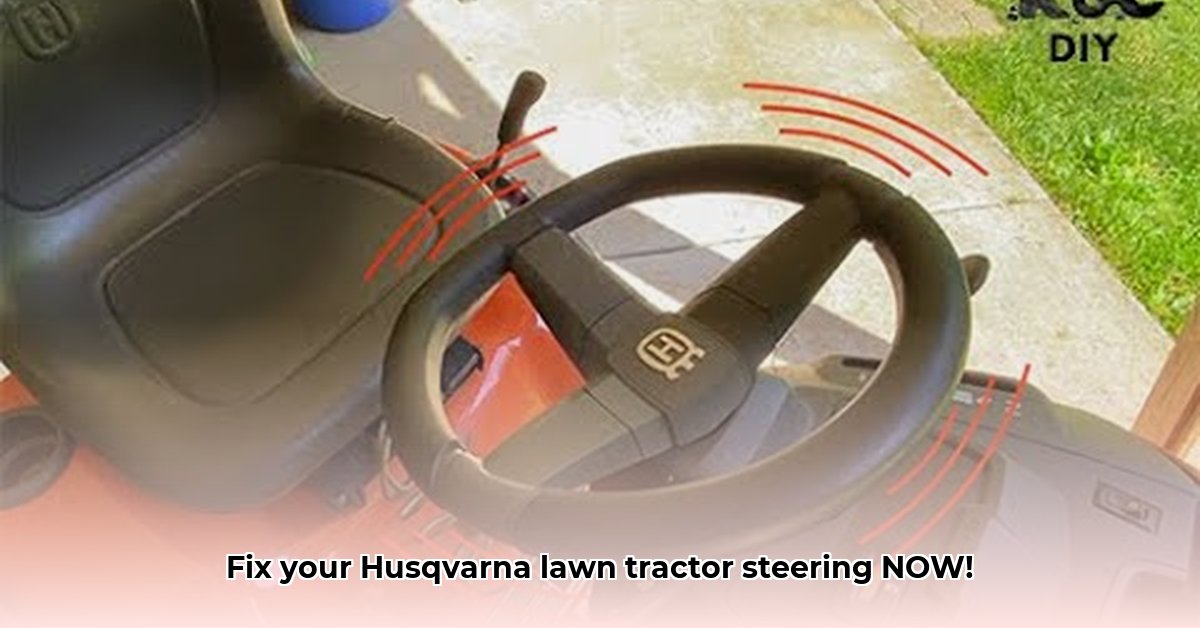
Steering problems on your Husqvarna lawn tractor can be frustrating, hindering efficient mowing and even posing safety risks. This guide provides a step-by-step approach to diagnosing and fixing common steering issues, empowering you to get your tractor back on track. Whether your steering is loose, stiff, or unresponsive, we'll equip you with the knowledge and methods for a successful DIY repair. For more Husqvarna tractor resources, see this helpful site: Husqvarna resources.
Diagnosing Steering Problems: A Systematic Approach
Before diving into repairs, accurately identifying the problem is crucial. The following steps will guide you through a systematic diagnostic process.
Step 1: Visual Inspection – Identifying Potential Culprits
Begin with a thorough visual inspection of your Husqvarna lawn tractor's steering system. Look for any signs of damage, wear, or looseness in the following components:
- Bushings (rubber or plastic components reducing friction): Check for cracks, tears, or excessive wear. Worn bushings often lead to loose or sloppy steering.
- Tie Rods (metal rods connecting the steering wheel to the wheels): Inspect for bends, loose connections, or any damage. Bent tie rods can cause the tractor to pull to one side.
- Linkages (connecting various parts of the steering system): Check for looseness, rust, or signs of wear. Loose linkages can result in imprecise or stiff steering.
- Hydraulic System (if applicable): If your model has hydraulic steering, check for fluid leaks, low fluid levels, or any signs of damage. Leaks can cause sluggish or unresponsive steering.
Step 2: Steering Wheel Test – Assessing Steering Performance
Next, test the steering wheel itself. Slowly turn the wheel back and forth, noting the following:
- Resistance: Does the wheel feel unusually hard to turn? Increased resistance might indicate problems with linkages, bushings, or a worn steering gear.
- Play or Slack: Is there noticeable looseness or play in the steering? This often points to worn bushings or loose connections.
- Noises: Do you hear any grinding, squeaking, or knocking sounds while turning the wheel? These usually indicate significant wear or damage.
Step 3: Correlation and Diagnosis – Pinpointing the Problem
By combining the observations from your visual inspection and steering wheel test, you can identify the likely cause of the steering problems. For instance, loose and wobbly steering often points to worn bushings, while hard steering with grinding noises suggests a problem with the steering gear.
Common Steering Problems and Solutions
This table summarizes common steering problems, their causes, and possible solutions:
| Problem | Possible Cause(s) | Solution |
|---|---|---|
| Loose, sloppy steering | Worn bushings, loose linkages | Replace bushings, tighten linkages |
| Steering pulls to one side | Bent tie rod, uneven tire pressure | Replace tie rod, adjust tire pressure |
| Hard steering | Worn steering gear, damaged linkages, low hydraulic fluid | Replace worn components, refill hydraulic fluid |
| Grinding or squeaking noises | Worn bushings, damaged steering gear | Replace worn components, lubricate |
| Unresponsive steering | Low hydraulic fluid, pump failure (hydraulic systems) | Top off or replace hydraulic fluid, repair pump |
DIY Repairs: A Step-by-Step Guide
Once the problem is identified, you can proceed with repairs. Remember safety first: always disconnect the spark plug before starting any work.
Step 1: Gathering Supplies – Essential Parts and Tools
Before beginning, gather the necessary replacement parts and tools. Source genuine Husqvarna parts or reputable aftermarket alternatives, ensuring compatibility with your model. Consult your owner's manual for part numbers and torque specifications. Essential tools may include socket wrenches, screwdrivers, pliers, a bushing removal tool, and grease.
Step 2: Replacing Steering Bushings – A Common Repair
Replacing worn bushings is a relatively straightforward repair for many Husqvarna lawn tractor steering issues. This will involve disassembling the relevant linkage, carefully removing the old bushings (using a bushing removal tool is highly recommended), and installing new bushings, ensuring proper seating. Lubricate all components before reassembly.
Step 3: Addressing More Complex Repairs – Linkages and Tie Rods
Replacing tie rods or other linkage components requires more mechanical skill and potentially specialized tools. Consult your owner’s manual or search for repair videos online for model-specific instructions. Accurate torque specifications are critical to prevent damage.
Step 4: The Importance of Lubrication – Maintaining Smooth Operation
Regular lubrication is crucial for maintaining smooth steering and extending the lifespan of your tractor's components. Apply the recommended grease to all moving parts of the steering system as outlined in your owner's manual.
Preventative Maintenance: Avoiding Future Problems
Preventative maintenance is key to avoiding costly repairs down the road.
- Regular Inspections: Perform visual inspections of your steering system every few months and after heavy use to identify potential issues early.
- Lubrication: Regularly lubricate the moving parts of your steering system with the recommended grease.
- Tighten Fasteners: Periodically check and tighten all nuts and bolts on the steering system to ensure secure connections.
By following these steps, you can effectively diagnose and repair most steering problems on your Husqvarna lawn tractor, restoring smooth operation and extending its lifespan. Remember, consulting your owner’s manual and seeking professional help if needed is always a good idea. For additional resources, visit the official Husqvarna website 1.